Physical Address
304 North Cardinal St.
Dorchester Center, MA 02124
Physical Address
304 North Cardinal St.
Dorchester Center, MA 02124

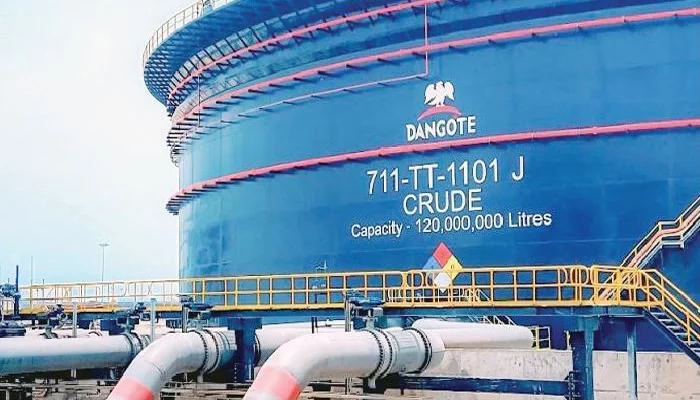
For decades, African economies have operated under a frustrating, paradoxical economic loop. The continent would pump millions of barrels of high-grade crude oil out of its soil, ship it across global oceans to European and Middle Eastern refineries, and then buy it back as expensive, finished fuel. This cycle drained billions in foreign exchange and left local economies highly vulnerable to global supply shocks.
The Dangote Refinery has fundamentally broken this historical cycle. Operating at its massive 650,000 barrels per day (bpd) capacity in Lekki, Nigeria, the $20 billion complex has transformed the nation into a net petrol exporter for the first time in decades. This shift is dynamically redrawing trade lines, altering market mechanics, and reshaping financial structures across the entire African continent.
The traditional trade corridors that long sustained European refiners are shifting rapidly. The massive influx of Dangote-refined products has displaced European fuel imports into West Africa by nearly a quarter. Instead of looking north toward Rotterdam, regional energy buyers are now looking directly to the Gulf of Guinea.
Old Colonial Loop:  African Crude ──> Shipped to Europe ──> Refined ──> Shipped Back to Africa
New Dangote Loop:   African Crude ──> Lekki, Nigeria Refinery ──> Direct African Distribution
This trade transformation has given rise to fascinating new distribution dynamics. The port city of Lomé, Togo, has quickly emerged as a critical ship-to-ship (STS) trading hub. Large product tankers from the Lekki facility unload offshore in Lomé, where fuel is blended, stored, and redistributed via nimble coastal vessels to smaller ports across West Africa—and even shipped back to keep the Nigerian domestic market fully supplied.
Beyond West Africa, the facility is successfully expanding its logistics footprint. Fuel shipments now regularly head east and south toward markets like Ghana, Cameroon, Côte d’Ivoire, and Tanzania. By providing a steady alternative to Middle Eastern supply routes, the refinery offers an essential buffer for African nations facing tight inventories and global supply chain bottlenecks.
The broader macroeconomic implications of this project are immense. Refined petroleum has historically stood as the single largest drain on African foreign exchange reserves. In Nigeria alone, the annual fuel import bill hit a staggering $14.06 billion in 2024 before dropping toward $10 billion as local production ramped up.
Beyond industrial output, the refinery is preparing to reshape continental financial markets through a highly anticipated Initial Public Offering (IPO). The corporate strategy involves listing a 10% stake in the energy giant on the Nigerian Exchange (NGX), alongside an explored dual listing in global financial hubs to attract international asset managers.
What makes this financial move unique is its structural design. While shares will be purchased in local currency, the company intends to pay dividends in US dollars, backed by its multi-billion-dollar export revenues. In an environment managing high inflation and currency volatility, this structure offers institutional pension funds and everyday retail investors a rare, premium shield against inflation.
The Securities and Exchange Commission (SEC) of Nigeria has tightly monitored this process—actively cracking down on unapproved early market promotions to protect the public—underscoring the monumental scale and market sensitivity of this listing.
The transition from a resource-exporting economy to an industrial hub is rarely seamless. The refinery continues to navigate complex structural bottlenecks. Despite processing massive daily volumes, it faces ongoing domestic crude supply friction. Local allocations from international oil companies frequently fall short, sometimes forcing the mega-facility to buy crude from distant global markets, which introduces unexpected operational costs.
Simultaneously, the sheer scale of the operation introduces delicate political and competitive friction. Moving away from traditional state-managed import structures has triggered resistance from entrenched distribution networks and regulatory bodies. To counter fears of a private monopoly, the public listing is designed to spread corporate equity widely across society, turning a singular corporate triumph into a shared African asset.
The facility proves that African markets possess the capacity to build, finance, and execute world-scale heavy industrial projects. By keeping the wealth of African crude oil entirely within continental borders, it serves as a powerful blueprint for regional industrialization, showing that Africa can successfully fuel its own economic future.
.